
Industrial Waste Management in Saudi Arabia: Why Has It Become an In-Demand Skill?
Industrial Waste Management in Saudi Arabia: Why Has It Become an In-Demand Skill?
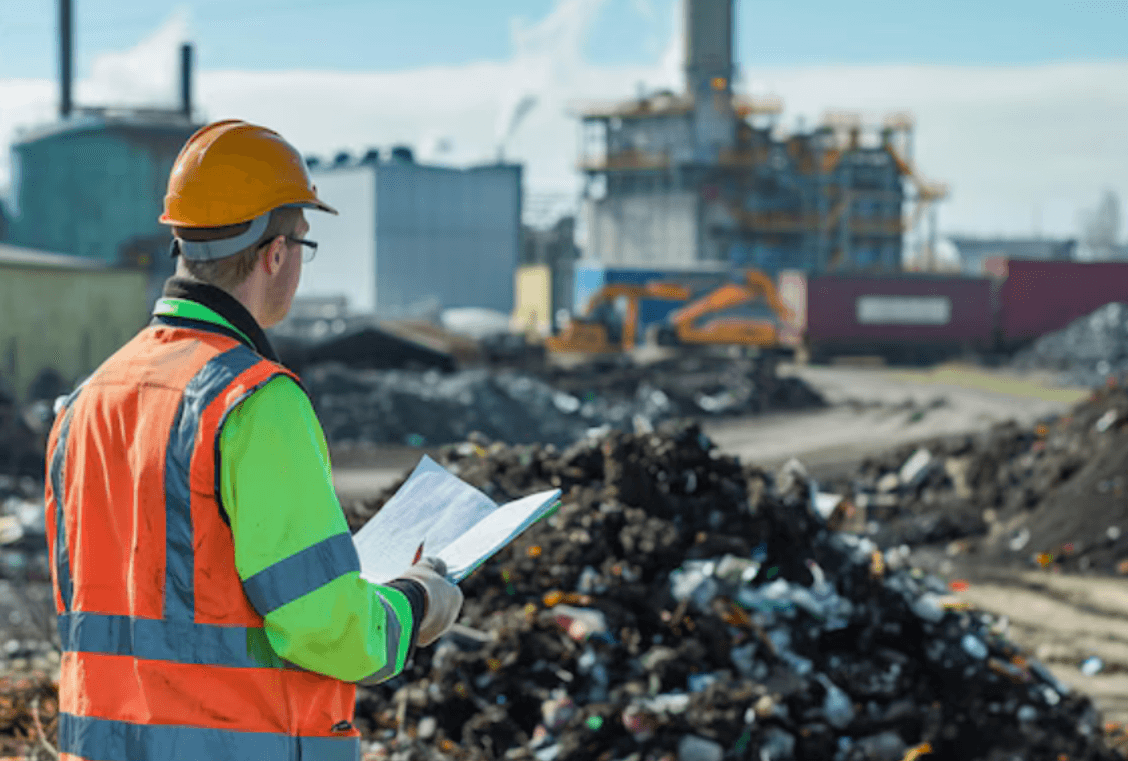
Industrial waste management in Saudi Arabia is receiving a great deal of attention from officials, given that it is one of the environmental topics of significant importance to the Kingdom. Waste management in Saudi Arabia receives special attention in light of industrial expansion and the Kingdom's Vision 2030, which works to reduce the environmental impact resulting from industrial activities. The state has issued many strict regulations and legislation in order to protect the environment through recycling, in addition to introducing modern technologies in waste treatment.
Throughout this article, we will discuss what industrial waste is and how it differs from household waste, the most prominent industrial waste management skills in Saudi Arabia for companies, and the most important waste management jobs.
What Is Industrial Waste and How Does It Differ from Household Waste?
Industrial waste refers to the by-products of factories and institutions resulting from production processes, such as oils, toxic residues, metals, and chemical substances. This type of waste is more dangerous and harmful compared to household waste.
Industrial waste can contain toxic or flammable materials, which increases its level of danger. Household waste, on the other hand, includes paper, food scraps, and plastic.
Household waste can be treated and disposed of easily, whereas industrial waste requires special handling in treatment and transportation to avoid its impact on the environment.
Common Types of Industrial Waste in Saudi Factories
The type of industrial waste in factories varies depending on the type of industry. Therefore, industrial waste management in Saudi Arabia requires a good understanding of the nature of different industries.
The most prominent types of industrial waste in factories include:
- Chemical waste resulting from petrochemical industries, such as solvents and acids, which are among the most dangerous types of waste.
- Solid waste, the most well-known of which includes plastic, scrap, and metals.
- Liquid waste, which includes chemical substances, oils, and contaminated water.
Gas and oil industries also produce hazardous waste such as hydrocarbon residues, batteries, and electronic waste.
What Are the Environmental and Health Risks of Unmanaged Industrial Waste?
Neglecting the recycling of industrial waste can result in significant environmental and health risks.
Therefore, safe disposal of this waste is essential to prevent the leakage of toxic and harmful materials into the environment and water.
Improper disposal of industrial waste can affect drinking water, agricultural land, and even the air as a result of harmful gases leaking into the atmosphere, which damages human health.
The danger of industrial materials lies in the potential for serious illnesses such as poisoning and even cancer, and this is where the importance of industrial waste management in Saudi Arabia lies in protecting everyone's health.
The relevant authorities are keen on imposing strict laws and penalties on violators, and therefore monitoring is tightened in order to ensure full compliance with environmental standards.
Saudi Legislation Governing the Handling of Industrial Waste
Protecting the environment requires establishing firm legislation for industrial waste management, and this is what the Kingdom has focused on through the development of a comprehensive legislative framework known as the Waste Management System.
This system operates under the full supervision of the National Waste Management Center, which defines the duties of waste-producing institutions and how waste should be handled.
The system also addresses the correct mechanisms for treatment, storage, and transportation, while ensuring that all environmental permits are obtained and companies are required to submit periodic reports on waste recycling.
The legislation also addresses harsh penalties and fines for violators in order to protect the environment and achieve Vision 2030's goal of a good life and a clean environment.
The Role of the Saudi Investment Recycling Company (SIRC) in Waste Management
Given the significant attention paid by officials to industrial waste management in Saudi Arabia, companies have been working hard to offer their services, with the Saudi Investment Recycling Company (SIRC) being the most prominent among them.
The company plays a fundamental role in developing the waste management sector in Saudi Arabia and was established through an initiative of the Saudi Public Investment Fund.
One of the company's goals is to recycle waste in order to reduce waste, protect and benefit from the environment, and thereby build a circular economy. This is achieved through advanced waste management projects.
SIRC works on developing the infrastructure of the waste sector, using modern technologies, and attracting investments in order to convert waste into economic resources.
How Does a Company Build an Integrated Industrial Waste Management Plan?
The company's effective plan for industrial waste management relies on a comprehensive assessment of the volume and types of waste, after which the process of classifying waste into hazardous and non-hazardous begins.
Based on this classification, the mechanism for handling the waste is established. The plan contains clear steps for safe storage, treatment, and recycling, as well as transportation.
The company pays attention to employees by training them on the correct way to handle waste, in addition to guiding companies toward modern technologies to reduce waste production from the outset.
Waste-to-Energy Technologies: Are They Being Applied in Saudi Arabia?
One of the innovative solutions for industrial waste management in Saudi Arabia is converting waste into energy to reduce reliance on traditional energy sources, and this is one of the best solutions available.
Through these technologies, waste is incinerated or thermally treated to produce electricity and fuel. These solutions have already been adopted in the Kingdom and implementation has begun.
Work has started on pilot projects in a number of cities in Saudi Arabia, although it is worth noting that some of these technologies are still in the development and study phase compared to more advanced countries.
The Difference Between Hazardous Waste Management and Regular Industrial Waste Management
The fundamental difference between regular industrial waste and hazardous waste lies in the level of danger involved and the correct steps for handling each type.
Hazardous waste may contain flammable or toxic materials such as batteries and chemical substances, which is why it requires strict procedures in the recycling and disposal process.
Regular industrial waste such as plastic and metals carries less danger and is easier to recycle. It is therefore essential to classify waste correctly in order to recycle it in the most optimal way.
The Most Prominent Industrial Waste Management Skills for Companies That Trainees Gain in the Waste Management Course
The industrial waste management course in Saudi Arabia provides trainees with many skills that help them in the job market, most notably how to store waste safely and classify it correctly.
Trainees are also able to understand the environmental systems and legislation in the Kingdom, which allows them to develop a comprehensive waste management plan and even work on reducing waste at the source.
The industrial waste management course offered by the Higher Saudi Skills Institute is considered one of the most important courses in this field, qualifying many distinguished professionals and graduates.
The Most Important Waste Management Jobs in Saudi Arabia
The field of waste management in Saudi Arabia offers many distinguished job positions that vary according to the type of role, especially with the expansion of this sector. The most prominent of these jobs are:
- Waste management specialist, who is responsible for planning and overseeing the implementation of waste handling programs within institutions.
- Environmental engineer, who oversees the institution's compliance with environmental legislation and laws.
- Waste treatment technician, who operates the equipment and machinery used for treatment and recycling.
- Project manager, who is fully responsible for the project and oversees all work teams within it.
How Does Applying Circular Economy Principles Help Reduce Waste?
Industrial waste management in Saudi Arabia requires an understanding of circular economy principles in reducing waste by redesigning the consumption and production cycle rather than using and then disposing.
The circular economy focuses on recycling, reusing, and extending the lifespan of products. Accordingly, from an industrial perspective, raw materials can be reused and losses in production processes can be reduced.
Using these principles helps drive innovation in recycling through products that are designed to be recyclable, which means waste will be converted into economic resources and operational costs will decrease.
What Is the Role of Industrial Companies in Achieving the Environmental Goals of Vision 2030?
Industrial companies are considered among the most important contributors to achieving the environmental goals of Vision 2030 by reducing the volume of waste and emissions and using sustainable production methods.
This is done through compliance with environmental standards, implementing energy efficiency standards and investing in clean technologies, and resorting to recycling to reduce natural resource consumption.
Companies' belief in the importance of environmental transparency and disclosure plays a major role in protecting the environment, achieving Vision 2030, and combining sustainability with economic prosperity.
Salaries of Industrial Waste Management Specialists in Saudi Arabia 2026
Salaries of those working in waste management in the Kingdom vary according to years of experience, qualifications, job title, and the size of the company's operations. The following are the average salaries at companies:
- A specialist's salary ranges between 6,000 and 9,000 Saudi Riyals per month.
- An environmental engineer receives a relatively higher salary ranging between 10,000 and 18,000 Saudi Riyals per month.
- Those in senior positions such as managers have salaries exceeding 20,000 Saudi Riyals per month.
It is worth noting that salaries are expected to increase as the sector continues to expand and environmental competencies become more widespread, especially given the significant government attention paid to this sector.
Is the Industrial Waste Management Course Accredited and Suitable for Engineering and Science Graduates?
The industrial waste management course is considered highly suitable for engineering and science graduates, especially those with an interest in environmental fields, industrial operations, or safety.
It offers applied content that helps trainees understand how to handle waste resulting from industrial processes in a safe and organized manner.
This field has also become increasingly important in Saudi Arabia with the tightening of environmental compliance requirements and the application of modern standards inside factories and facilities.
Saudi industrial waste laws play a fundamental role in regulating this sector, as they impose specific methods on facilities for collection, storage, and treatment to ensure reduced environmental impact and compliance with approved standards.
The Higher Saudi Skills Institute offers the best industrial waste management course in-person with an accredited certificate that helps you understand these laws in a practical way, and provides you with skills for applying collection, classification, and treatment methods in accordance with the internationally approved environmental standards adopted in Saudi Arabia.
How Do You Start Your Career in Industrial Waste Management in Saudi Arabia?
Starting out in the field of industrial waste management requires a clear understanding of how to handle industrial waste and methods for reducing its environmental impact within facilities, alongside gaining practical skills that align with the requirements of the Saudi market.
Our industrial waste management course provides you with practical training that helps you build a strong professional foundation, through understanding collection and treatment methods and the practical application of environmental standards within industrial work environments in Saudi Arabia.
With the growing focus on sustainability and environmental compliance within the industrial sector in Saudi Arabia, the specialization of industrial waste management has become one of the fields that opens up promising career opportunities for specialists and those interested in environmental work.
Start your professional journey now and join the accredited industrial waste management course from the Higher Saudi Skills Institute, and gain practical skills that help you work efficiently in accordance with modern environmental standards inside industrial facilities.
FAQs
What is the importance of industrial waste management in the Kingdom?
It protects the environment and public health, supports sustainability, and helps companies comply with regulations, reduce costs, and achieve the goals of Vision 2030.
What is the difference between industrial waste and hazardous waste?
Hazardous waste is more harmful and contains toxic materials, requiring special procedures, while regular industrial waste is less dangerous and easier to treat and recycle.
How do companies contribute to reducing waste?
Through reducing production at the source, recycling, using clean technologies, and applying circular economy principles in operational processes.
Does waste management provide job opportunities?
Yes, it provides multiple jobs such as environmental specialist, sustainability engineer, and waste treatment technician, with the sector growing in Saudi Arabia and demand increasing.