
The Most Notable Human Resources Programs in Saudi Arabia and How to Learn Them
The Most Notable Human Resources Programs in Saudi Arabia and How to Learn Them
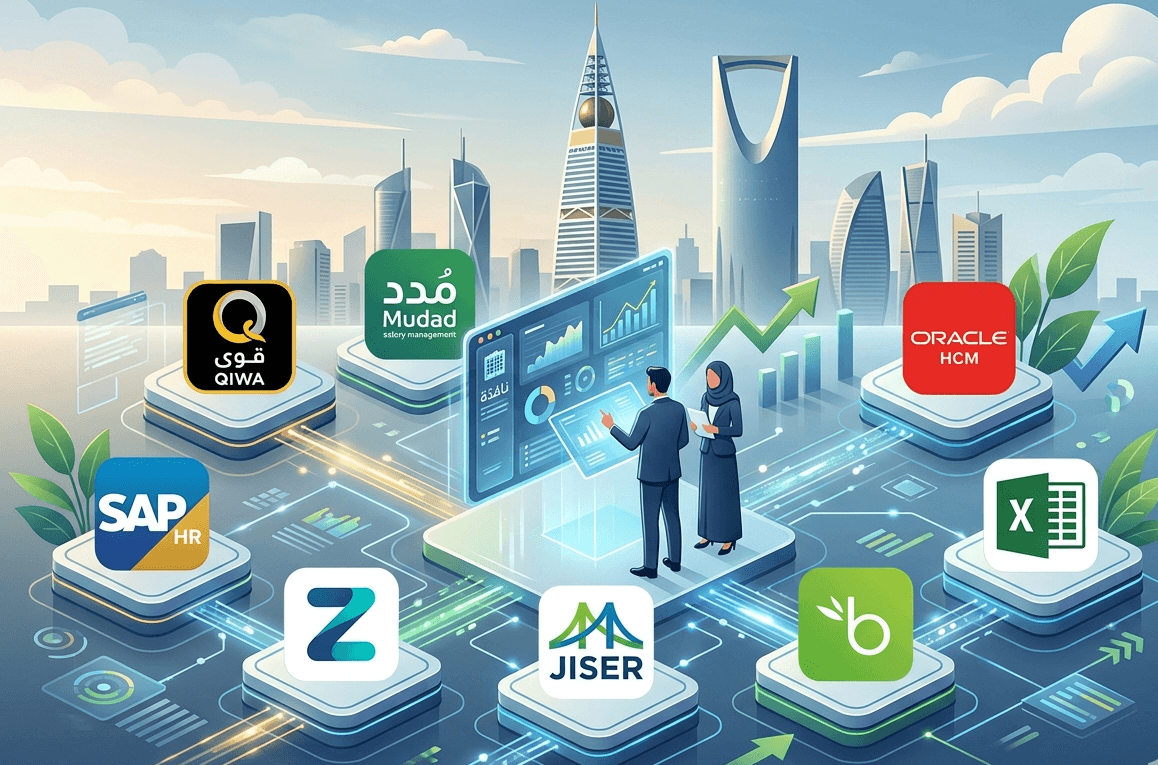
Human resources programs in Saudi Arabia have become a core part of workforce management within companies. The role of the HR department is no longer limited to recruitment or employee follow-up, it has expanded to include the use of advanced digital systems that manage salaries, contracts, attendance, and localization rates with precision and speed. With the rapid digital transformation taking place in the Saudi labor market, these systems have become an indispensable skill for anyone who wants to work or grow in this field.
In this article, we will review the most notable HR systems and human resources programs in Saudi Arabia, and explain how to learn and use them in the workplace, as well as the importance of acquiring these skills.
Why Every HR Specialist in Saudi Arabia Must Master Government Platforms
Digital government platforms have become a core part of daily work within HR departments in Saudi Arabia, especially with the digital transformation taking place in the labor market and the reliance of most administrative procedures on electronic systems.
Therefore, mastering these platforms, or human resources programs in Saudi Arabia, is no longer an added bonus, but a necessity for any HR specialist who wants to work efficiently within modern companies.
These platforms help manage contracts, monitor localization, generate reports, and organize employee data in a faster and more accurate way.
Many companies have also started requiring familiarity with them during the hiring process.
What Is the Qiwa Platform and How Do You Use It to Manage Contracts and Labor?
The Qiwa platform is one of the most important digital platforms related to HR management in Saudi Arabia.
It was launched by the Ministry of Human Resources to facilitate the electronic management of the relationship between employees and employers.
The platform is used for a wide range of tasks, such as:
- Issuing and documenting employment contracts.
- Monitoring employee data.
- Managing localization and Saudization rates.
- Transferring employment services.
- Issuing visas and work permits.
- Monitoring compliance with labor regulations.
Mastering the use of this platform helps HR specialists execute procedures quickly, reduce administrative errors, and increase their overall efficiency within the company.
The Mudad System for Payroll Management and How It Helps Protect Wages
Mudad is one of the best systems among human resources programs in Saudi Arabia, and it is used to manage payroll and link it to the Wage Protection Program in Saudi Arabia.
This program aims to organize payroll processes and ensure that companies pay employee entitlements on time. The system also helps companies:
- Manage salaries electronically.
- Document payroll transactions.
- Comply with Wage Protection Program requirements.
- Reduce financial and administrative errors.
- Easily monitor employee financial data.
The Most Important Human Resources Programs in Saudi Arabia and Cloud-Based Systems
With the accelerating digital transformation within Saudi companies, cloud-based HR systems in Saudi Arabia have become a core part of employee management and daily administrative operations.
These systems not only help organize work, but also give companies greater speed in managing data, making decisions, and improving the employee experience.
For this reason, familiarity with these programs has become an important skill for any HR specialist who wants to work efficiently within the modern Saudi market.
Among the most important systems and human resources programs in Saudi Arabia:
The Muqeem Platform: Its Role in Tracking Expatriate Workers and Residency Data
The Muqeem platform is considered one of the important systems that companies in Saudi Arabia rely on to manage expatriate worker data and handle residency matters electronically.
The platform helps issue and renew residency permits, track visa validity, and manage the data of non-Saudi employees with ease and speed.
The existence of this platform has helped HR departments reduce paperwork and improve the monitoring of employees' legal status, especially in companies with large numbers of expatriate workers.
The Nafith Electronic Labor System: What You Need to Know
Nafith is one of the systems associated with facilitating electronic procedures between different entities within the Kingdom.
It is used in some sectors to organize transactions and administrative procedures electronically in a faster and more accurate manner.
Knowing how to deal with similar systems and human resources programs in Saudi Arabia has become an important skill for HR employees, as it helps:
- Speed up workflow.
- Reduce errors.
- Improve data management within organizations.
SAP HR vs. Oracle HCM: Which Is More Widely Used in Saudi Arabia?
Both SAP HR and Oracle HCM are among the most powerful global systems used for human resources management within large companies in Saudi Arabia.
SAP HR focuses heavily on managing internal operations and connecting different departments within a company, while Oracle HCM stands out with strong capabilities in talent management, data analytics, and cloud-based recruitment.
The following table compares both systems:
| SAP HR | Oracle HCM | |
| Most Common Use | Large companies and multi-department institutions | Companies focused on talent management and digital transformation |
| Key Strength | Managing internal operations and connecting departments | Talent management, recruitment, and cloud analytics |
| System Type | Integrated with other SAP systems | Flexible and advanced cloud system |
| Best Suited For | Large enterprises, industrial sectors, and banks | Modern companies and organizations relying on cloud solutions |
| Payroll & Employee Affairs Management | Very strong and detailed | Advanced and easy to integrate with other systems |
| Recruitment & Talent Management | Available but less flexible | Very strong, featuring modern tools |
| Ease of Use | Requires more training and experience | Relatively easier interface for users |
| Presence in Saudi Arabia | Widespread in large companies and major entities | Common in modern institutions and expanding companies |
| Suitable for Beginners? | Takes time to learn | Relatively easier for beginners in cloud systems |
In the Saudi market, the choice of system depends on the size and needs of the company, but both systems are widely in demand across large institutions, banks, and multi-branch companies.
ZenHR, Jisr, and BambooHR: A Comparison of the Most Popular Local HR Systems
These systems are among the most widely used human resources programs in Saudi Arabia, especially among medium-sized and startup companies, because they offer flexible and easy-to-use tools for HR management:
- ZenHR focuses on attendance, leave, and payroll management with a user-friendly interface suited to medium-sized companies.
- Jisr is a well-known local system in Saudi Arabia, distinguished by its compatibility with Saudi labor regulations, localization platforms, and payroll systems.
- BambooHR is globally recognized for its simple interface and tools suited for managing employee data, recruitment, and performance reviews.
The following table compares these cloud-based systems so you can identify the key differences between them:
| ZenHR | Jisr | BambooHR | |
| System Type | Cloud HR system | Local cloud HR system | Global cloud HR system |
| Best Suited For | Medium-sized companies | Saudi companies | Small and medium-sized companies |
| Key Features | Attendance, leave, and payroll management | Compatibility with Saudi systems and Saudization | Ease of use and employee data management |
| Payroll Management | Available | Strong and suitable for the Saudi market | Available with basic features |
| Saudi Labor System Support | Moderate | Very strong | Limited compared to local systems |
| Attendance & Departure Management | Advanced | Advanced | Good |
| Recruitment & Talent Management | Available | Available | Strong and easy to use |
| Ease of Use | Easy | Easy and suitable for local companies | Very easy |
| Suitable for Startups | Yes | Yes | Yes |
| Presence in Saudi Arabia | Good | Widespread within the Saudi market | Used in global companies and some local companies |
Choosing the right system depends on the company's size, number of employees, and the nature of the operations the organization needs to manage on a daily basis.
How to Connect Internal HR Systems with the Ministry of Human Resources Platforms
Companies in Saudi Arabia are increasingly relying on the integration between internal HR systems and government platforms to simplify employee management and reduce manual procedures.
This integration helps transfer data automatically between systems, saving time and reducing administrative errors.
Typically, the integration with platforms such as Qiwa and Mudad is done through human resources programs in Saudi Arabia that support electronic integration, where the following can be updated:
- Employee data.
- Contracts.
- Salaries.
This integration helps companies speed up administrative procedures, improve data accuracy, comply with localization and wage protection requirements, and reduce paperwork and manual repetition.
What Technical Skills Are Employers Looking for in HR?
Working in Human Resources is no longer based solely on administrative skills, technical skills have become one of the most important requirements in the Saudi labor market, especially with the spread of cloud systems and digital transformation within companies.
Among the most notable technical skills in demand:
- Using human resources programs in Saudi Arabia and cloud-based systems.
- Working with the Qiwa and Mudad platforms.
- Managing employee databases.
- Using Excel for reports and analysis.
- Preparing performance and payroll reports.
- Working with electronic systems for recruitment and attendance.
Possessing these skills gives specialists greater opportunities in the Human Resources to secure better jobs and advance more quickly within the field.
The Role of Excel and Data Analysis in Daily HR Work
Alongside human resources programs in Saudi Arabia, Microsoft Excel remains one of the most commonly used tools on a daily basis within HR departments, as it helps organize and analyze data in an easy and effective way. Excel is used for:
- Preparing payroll sheets.
- Tracking attendance and leave.
- Analyzing absenteeism and employee turnover rates.
- Preparing performance reports.
- Organizing recruitment data and applicant records.
Data analysis has also become an important skill in HR, as it helps management make decisions based on real numbers and indicators rather than estimates alone.
How Can a Company Protect Itself from Wage Protection System Fines?
Companies in Saudi Arabia are required to comply with the Wage Protection Program to ensure employee salaries are paid on time and in the correct amounts, any delay or error can lead to fines and regulatory issues.
To protect itself from these fines, a company needs to:
- Commit to paying salaries on time.
- Document payment processes electronically.
- Continuously update employee data.
- Use payroll systems linked to the Mudad platform.
- Review financial reports on a regular basis.
- Ensure that contracts and salaries match official records.
Relying on human resources programs in Saudi Arabia and modern digital systems reduces errors and helps the company fully comply with Ministry of Human Resources requirements.
Hands-On Training with Qiwa and Mudad: How to Acquire the Skill Quickly
Learning to use the Qiwa and Mudad platforms is no longer optional for HR employees in Saudi Arabia, as most companies rely on them daily for managing contracts, payroll, and employee data.
The fastest way to acquire this skill is through direct hands-on learning rather than relying on theoretical explanation alone.
Here is how to use Qiwa and Mudad at work and the most important things you should practice to master them quickly:
- Creating and managing employment contracts electronically.
- Monitoring employee data and updates.
- Handling salaries and the Wage Protection Program.
- Reviewing localization rates and Saudization requirements.
- Extracting administrative reports and data.
- Understanding the steps for linking systems with government platforms.
Joining the best certified HR course in Saudi Arabia from the Higher Saudi Skills Institute can help you learn these platforms quickly and professionally.
The Institute provides practical in-person training that helps trainees understand how to use Qiwa and Mudad in an applied manner, with explanations of the key steps required by the Saudi labor market.
Is Learning HR Systems a Necessity or an Advantage in the 2026 Labor Market?
In 2026, learning HR systems and human resources programs in Saudi Arabia is no longer just an added advantage, it has become one of the core requirements in most HR positions within the Kingdom.
Companies today rely heavily on digital systems to manage contracts, salaries, attendance, and recruitment, so it has become difficult to work efficiently without understanding these tools.
Employers have also begun preferring candidates who have experience working with platforms such as Qiwa, Mudad, and cloud-based HR systems, because this reduces training time and makes the employee more ready to work from day one.
This is exactly what the certified HR course from the Higher Saudi Skills Institute helps you with, as the course provides practical training that helps you:
- Understand the digital systems used in Human Resources.
- Learn how Qiwa, Mudad, and modern systems work.
- Acquire the technical HR skills that the Saudi labor market demands.
- Apply HR procedures in a hands-on way.
- Qualify for modern HR positions with greater confidence.
Common Mistakes When Using Government Platforms and How to Avoid Them
Although government platforms have simplified many HR procedures, errors in data entry or process follow-up can cause problems for companies.
Among the most common mistakes:
- Entering employee data inaccurately.
- Delaying contract or salary updates.
- Not monitoring expiry alerts for residency permits and contracts.
- Uploading payroll files that don't match official data.
- Ignoring updates to Saudization and localization rates.
- Not reviewing reports on a regular basis.
To avoid these issues, it is essential to rely on continuous review, update data as it changes, and make sure you fully understand how to use each platform correctly before executing any official procedure.
The Higher Saudi Skills Institute helps trainees, through its certified course, understand the common mistakes made when dealing with government systems and human resources programs in Saudi Arabia.
Expert instructors also explain precisely how to avoid them through practical applications and exercises that simulate real work environments.
How to Add HR Software Proficiency to Your CV Professionally
Adding skills in human resources programs in Saudi Arabia to your CV in a professional way helps you quickly attract the attention of employers, especially if the position requires working with digital systems and government platforms.
Instead of listing only general skills, it is better to clearly specify the programs you are proficient in, such as:
- Using the Qiwa platform.
- Working with Mudad.
- Managing cloud-based HR systems.
- Preparing HR reports using Microsoft Excel.
- Managing employee data and payroll.
It is also advisable to link these skills to any practical training or certified credential you have obtained, as this gives your CV greater credibility in front of recruitment managers.
Our certified HR course helps you acquire genuine practical skills that you can add to your CV with confidence.
It also grants you a certified credential that supports your employment prospects and shows employers that you possess applied knowledge suited to the needs of the modern Saudi market.
In conclusion, if you want to enter the Human Resources field with confidence or develop your professional level in line with the requirements of the modern Saudi labor market, this is your opportunity to join the certified HR course offered in person within Saudi Arabia by the Higher Saudi Skills Institute.
The course provides you with practical training on the most important HR skills and all the human resources programs in Saudi Arabia actually used within companies.
It also helps you build real applied experience that adds strong value to your CV and increases your chances of securing better job opportunities.
Start now, invest in highly in-demand skills in the labor market, and obtain certified training that helps you build a stronger professional future in Human Resources.
FAQs
What are human resources programs?
They are digital systems that help companies manage employees, salaries, contracts, attendance, and recruitment in an electronic and organized manner.
What are the most well-known HR platforms in Saudi Arabia?
Among the most widely used platforms in Saudi Arabia: Qiwa, Mudad, and Jisr, in addition to global systems such as SAP HR and Oracle HCM.
How do you master the use of HR management programs?
The best approach is hands-on training and direct application on the systems used within companies, combined with an understanding of the HR procedures linked to them.
Is learning cloud-based HR systems a necessity?
Yes, in 2026, cloud systems and human resources programs in Saudi Arabia have become core skills required in HR positions within the Kingdom.
Are human resources programs in demand in the Saudi labor market?
Absolutely, most companies now rely on digital systems to manage employees, salaries, and contracts, so the need for employees who can use them proficiently continues to grow.
Can HR systems be learned without prior experience?
Yes, they can be learned through applied training courses, such as the certified HR course from the Higher Saudi Skills Institute, which starts from the basics and explains how to use the systems in a practical way.